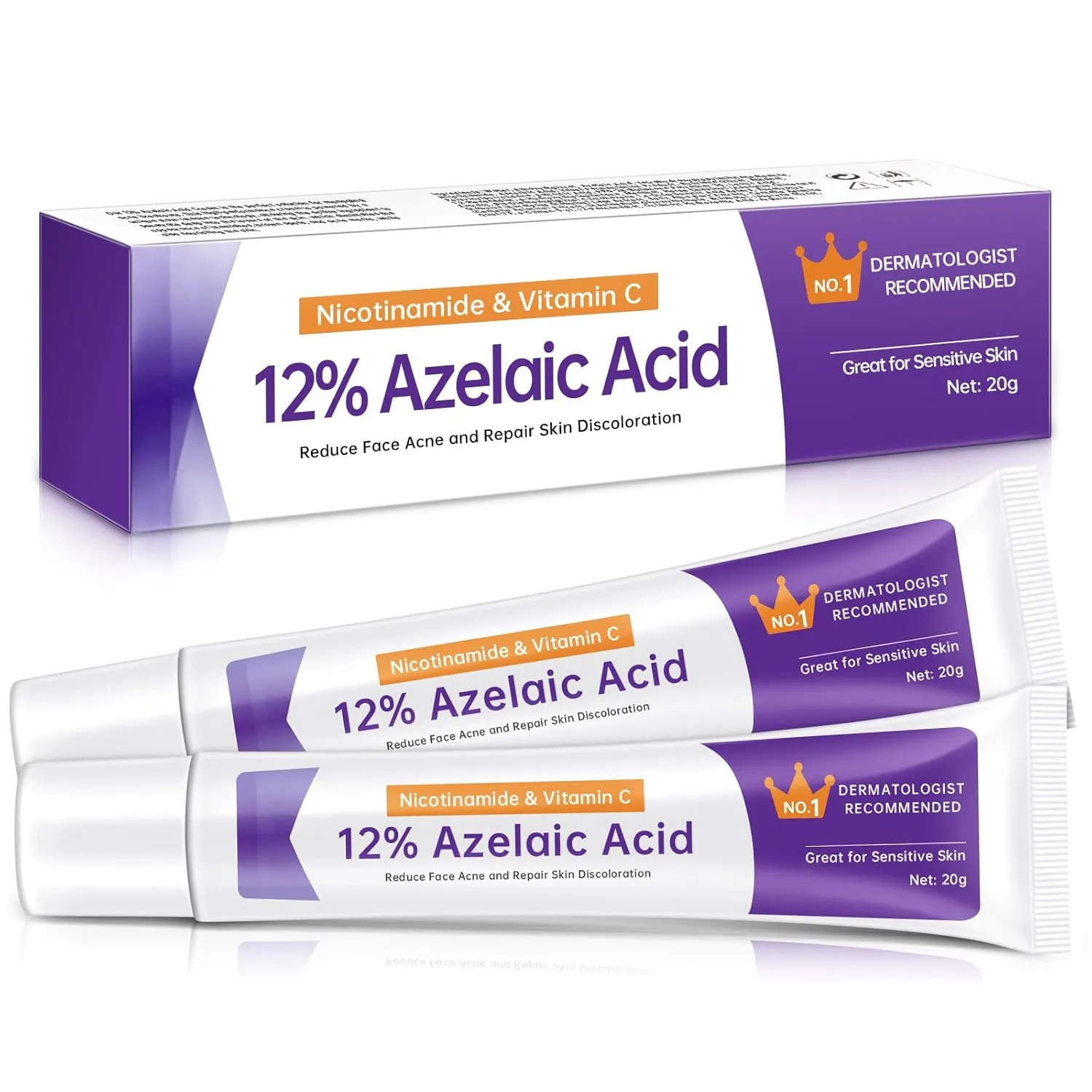
Azelaic Acid is a naturally occurring saturated dicarboxylic acid that exhibits antimicrobial, anti-inflammatory, and anti-keratinizing properties. It is highly effective in treating mild-to-moderate inflammatory acne and skin hyperpigmentation. In Bangladesh, Azelec (produced by The ACME Laboratories Ltd.) is one of the most recognized brands, providing a targeted approach to clearing skin blemishes and reducing facial redness.
What is Azelaic Acid Used For?
Azelaic Acid (typically in 15% or 20% concentrations) is prescribed for:
-
Acne Vulgaris: Treating inflammatory and non-inflammatory lesions (blackheads, whiteheads, and pimples).
-
Rosacea: Reducing the redness and swelling associated with papulopustular rosacea.
-
Hyperpigmentation: Addressing melasma and post-inflammatory hyperpigmentation by inhibiting abnormal melanocytes.
-
Bacterial Control: Effectively killing Propionibacterium acnes and Staphylococcus epidermidis on the skin surface.
Clinical Insight: Research suggests that 20% Azelaic Acid cream has efficacy comparable to 0.05% tretinoin or 4% hydroquinone but is often better tolerated with fewer side effects. For a deeper clinical review of its molecular action, you can visit DrugBank.
Dosage
For adults and adolescents (aged 12 and older), the standard application is:
-
Frequency: Apply a thin layer to the affected areas twice daily (morning and evening).
-
Preparation: Cleanse the skin with a mild soap or soapless lotion and pat dry before application.
-
Adjustment: Patients with sensitive skin may be advised to apply it once daily for the first week and then increase to twice daily.
Common Side Effects
While Azelaic Acid is safer for long-term use than many retinoids, common local reactions include:
-
Burning or stinging sensation
-
Pruritus (itching)
-
Scaling or dryness of the skin
-
Erythema (redness) at the application site
2026 Safety Update: According to reports in the Journal of Clinical Dermatology, local irritation is typically transient and subsides as the skin acclimates. However, patients with darker skin should be monitored for hypopigmentation (unusual skin lightening). For further details on adverse reactions, consult the Mayo Clinic guide.
Important Warnings & Precautions
-
External Use Only: Avoid contact with eyes, mouth, and other mucous membranes. If contact occurs, rinse immediately with water.
-
No Occlusive Dressings: Do not cover the treated area with bandages unless directed by a doctor.
-
Skin Sensitivities: Avoid using harsh alcoholic cleansers or abrasives simultaneously to prevent extreme irritation.
-
Pregnancy/Breastfeeding: Classified as FDA Category B; it should be used only if clearly needed.
Azelaic Acid vs. Benzoyl Peroxide: Key Differences and Usage
While both are used for acne, Azelaic Acid is often preferred for patients who also suffer from skin redness or sensitivity.
| Feature | Azelaic Acid (Azelec) | Benzoyl Peroxide |
| Primary Action | Antibacterial & Anti-inflammatory | Strong Antibacterial (Oxidizing) |
| For Hyperpigmentation | Effective (Lightens dark spots) | Not effective |
| Bleaching Effect | None (Safe for clothes/hair) | Can bleach fabrics and hair |
| Side Effects | Mild stinging/itching | Significant dryness/peeling |
| Unit Price (10g) | ৳75.50 | ৳135.00 – ৳150.00 |
Azelaic Acid Price in Bangladesh (January 2026 Update)
The following price reflects the current retail rate for the leading brand produced by ACME.
| Product Name | Format | Strength | Price (BDT) |
| Azelec Cream | 10g Tube | 20% w/w | ৳75.50 |
Azelaic Acid Alternative Brands & Prices
Here are the top 10 alternative brands and related topical agents available in Bangladesh as of January 2026:
| Brand Name | Company Name | Price (BDT) |
| Aclene 15% | Drug International Ltd. | ৳60.20 |
| Azelaic Acid 10% | The Ordinary (Imported) | ৳720.00 – ৳950.00 |
| Skinoren 20% | Bayer (Imported) | ৳1250.00 – ৳1500.00 |
| Azid 20% | Incepta Pharmaceuticals | ৳75.00 |
| Azclear 20% | Ego Pharmaceuticals | ৳1100.00 – ৳1300.00 |
| Picspot 15% | Galderma (Imported) | ৳980.00 |
| Zelac 20% | Square Pharmaceuticals | ৳75.00 |
| Azelate 20% | Beximco Pharmaceuticals | ৳75.00 |
| Azel 10% | Radiant Pharma | ৳70.00 |
| Aziduo (Gel) | Healthcare Pharma | ৳160.00 |
Frequently Asked Questions (FAQ) About Azelaic Acid
Q: What is the Azelaic Acid price in Bangladesh?
As of January 2026, the retail price for a 10g tube of Azelec (20%) is ৳75.50.
Q: What is Azelaic Acid used for?
It is primarily used to treat inflammatory acne, rosacea, and skin discoloration (melasma or dark spots).
Q: What are the side effects of Azelaic Acid?
Common effects include temporary stinging, itching, or redness during the first few weeks of application.
Q: Is Azelaic Acid safe during pregnancy?
Yes, it is generally considered one of the safer acne treatments during pregnancy, but should still be used under medical guidance. More info is available via PubMed.
Q: How long does it take to see results?
Significant improvement in acne or rosacea usually occurs within 4 to 8 weeks of consistent use.
Q: Can I use moisturizer with Azelaic Acid?
Yes. It is recommended to apply a gentle moisturizer after the acid has dried to help manage any potential dryness or itching.
Q: Does it cause sun sensitivity?
Unlike retinoids, it does not significantly increase sun sensitivity, but daily SPF 30+ is always recommended during any active skin treatment.
Q: Is it better than Salicylic Acid for acne?
Azelaic Acid is often better for “red” inflammatory acne and post-acne marks, while Salicylic Acid is superior for oily skin and blackheads.
Q: Are there alternatives to Azelec in Bangladesh?
Yes, popular alternatives include Aclene (Drug International), Azid (Incepta), and Zelac (Square).
Disclaimer: This information is for educational purposes as of January 2026. Always consult a dermatologist before starting a new skincare treatment.