
Asthma is a chronic condition that causes your airways to become inflamed, swollen, and narrow. This inflammation produces extra mucus, making it difficult to breathe. Common symptoms include wheezing, shortness of breath, chest tightness, and coughing, which are often triggered by allergies, dust, or exercise.
Types of Asthma
Asthma varies based on its triggers and how it develops. Common types include:
-
Allergic Asthma: Triggered by allergens like pollen, dust mites, or pet dander.
-
Non-Allergic Asthma: Caused by factors like cold air, stress, or viral infections.
-
Occupational Asthma: Resulting from inhaling fumes, gases, or dust in the workplace.
-
Exercise-Induced Bronchoconstriction (EIB): Narrowing of airways specifically during or after physical activity.
-
Cough-Variant Asthma: Primarily characterized by a persistent dry cough rather than wheezing.
Common Symptoms of Asthma
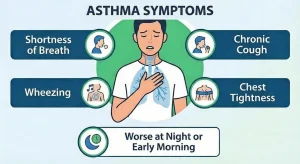
Recognizing asthma symptoms early is crucial for effective management. While signs vary from person to person, the most frequent indicators include:
-
Shortness of Breath: Feeling unable to catch your breath or winded easily.
-
Wheezing: A whistling or squeaking sound when exhaling.
-
Chronic Coughing: Persistent cough, especially at night or early morning.
-
Chest Tightness: A sensation of pressure or squeezing in the chest area.
These asthma symptoms often flare up during exercise, cold weather, or exposure to allergens.
Causes and Risk Factors of asthma
Understanding the causes and risk factors of asthma is essential for preventing frequent attacks. While the exact cause isn’t always known, it usually stems from a combination of genetic and environmental factors.
Primary Causes
-
Immune System Overreaction: For many, the immune system treats harmless substances (like pollen) as threats, causing airway inflammation.
-
Genetics: You are significantly more likely to develop asthma if a parent or sibling has it.
-
Respiratory Infections: Certain viral infections during infancy can damage developing lungs and lead to chronic asthma.
Major Risk Factors
-
Allergies: Having other allergic conditions, such as hay fever (allergic rhinitis) or eczema.
-
Environmental Exposure: Frequent exposure to secondhand smoke, air pollution, or chemical fumes at work.
-
Obesity: Studies show that being overweight increases the risk and makes asthma harder to manage.
-
Smoking: Both active smoking and maternal smoking during pregnancy are high-risk factors.
Diagnosis of asthma
To diagnose asthma, doctors use a combination of medical history, physical exams, and breathing tests to see how well your lungs are functioning. Because asthma symptoms can mimic other conditions (like a cold or bronchitis), these tests are essential for an accurate diagnosis.
Primary Diagnostic Tests
-
Spirometry: This is the most common test. You breathe into a machine that measures how much air you can exhale and how fast you can do it.
-
Peak Flow Test: A simple handheld device measures how hard you can breathe out. Low scores often indicate that your airways are narrowing
-
FeNO Test: Measures the amount of nitric oxide in your breath, which is a sign of inflammation in the lungs
-
Methacholine Challenge: Used if other tests are inconclusive; it involves inhaling a trigger to see if your airways react.
Additional Evaluations
-
Allergy Testing: Skin or blood tests to identify if allergens (like dust or pollen) are triggering your symptoms.
-
Chest X-ray: Usually done to rule out other issues like pneumonia or a foreign object in the airway.
Management and Treatment of asthma
Effective asthma treatment focuses on controlling airway inflammation and preventing flare-ups. Management typically involves two types of medication: long-term controllers (like inhaled corticosteroids) to reduce daily swelling and quick-relief inhalers (bronchodilators) for immediate relief during an attack.
Beyond medication, a successful asthma treatment plan includes:
-
Trigger Avoidance: Identifying and staying away from smoke, dust mites, or specific allergens.
-
Asthma Action Plan: A written guide from your doctor detailing daily medication and emergency steps.
-
Regular Monitoring: Using a peak flow meter to track lung function and catch symptoms early.
-
Healthy Lifestyle: Maintaining a healthy weight and getting annual flu shots to protect lung health.
Consistency is key; following a professional asthma treatment regimen allows most people to live active, symptom-free lives.
Lifestyle Changes and Home Remedies
Managing asthma effectively requires specific lifestyle changes and home remedies to reduce airway irritation. Focus on these key adjustments:
-
Environmental Control: Use HEPA air purifiers and allergen-proof covers to eliminate dust mites and pet dander.
-
Dietary Support: Incorporate anti-inflammatory foods like ginger, turmeric, and Omega-3 rich fish.
-
Breathing Exercises: Practices like the Buteyko method or yoga can help improve lung capacity and reduce stress.
-
Humidity Management: Keep indoor humidity below 50% to prevent mold growth.