Hypertension, or high blood pressure, is a chronic medical condition where the force of blood against artery walls is persistently too high, increasing the risk of heart disease and stroke.
Normal Range of Hypertension
It is important to understand that blood pressure readings consist of two numbers: Systolic (pressure when the heart beats) and Diastolic (pressure when the heart rests). The following table outlines the standard blood pressure categories defined by the American Heart Association (AHA):
Blood Pressure Categories Chart
| Blood Pressure Category | Systolic (Top Number) | Diastolic (Bottom Number) | |
| Normal | Less than 120 | and | Less than 80 |
| Elevated | 120–129 | and | Less than 80 |
| Hypertension Stage 1 | 130–139 | or | 80–89 |
| Hypertension Stage 2 | 140 or higher | or | 90 or higher |
| Hypertensive Crisis | Higher than 180 | and/or | Higher than 120 |
Common Symptoms of Hypertension
Hypertension symptoms are often difficult to detect, which is why the condition is frequently called the “silent killer.” Many people experience no obvious warning signs for years. However, when blood pressure reaches dangerously high levels, some individuals may notice:
-
Severe headaches and dizziness.
-
Shortness of breath or chest pain.
-
Blurred vision or “seeing spots.”
-
Nosebleeds and heart palpitations.
-
Fatigue or confusion.
If you experience these symptoms, seek medical advice immediately to prevent serious cardiovascular complications.
Causes and Risk Factors of High Blood Pressure
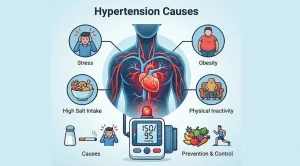
High blood pressure often develops over time due to various factors. Primary causes include high sodium intake, excessive alcohol consumption, and physical inactivity. Risk factors that increase susceptibility include:
-
-
Genetics: A family history of hypertension.
-
Age: Risk increases as arteries stiffen with age.
-
Obesity: Higher body weight requires more blood to supply oxygen, increasing pressure.
-
Stress: Chronic stress triggers hormonal responses that constrict vessels.
-
Key Differences of Primary vs Secondary Hypertension:
Understanding the distinction between these two types is essential for proper treatment. Primary hypertension develops gradually over time, while secondary hypertension appears suddenly due to an underlying medical condition.
Primary vs. Secondary Hypertension
| Feature | Primary (Essential) | Secondary |
| Cause | No identifiable cause (lifestyle/genetics) | Underlying condition (kidney, thyroid, etc.) |
| Onset | Gradual, usually in older adults | Sudden, can occur at any age |
| Frequency | 90–95% of all cases | 5–10% of all cases |
| Treatment | Lifetime management | Often cured by treating the root cause |
Management of Hypertension
Effective hypertension treatment focuses on lowering blood pressure through integrated lifestyle modifications and, if necessary, medical intervention. Key management strategies include:
-
DASH Diet: Emphasizing fruits, vegetables, and low-fat dairy while significantly reducing sodium (salt) intake.
-
Physical Activity: Engaging in at least 150 minutes of moderate aerobic exercise weekly.
-
Weight Management: Losing even a small amount of weight can drastically reduce arterial pressure.
-
Limiting Alcohol & Smoking: Quitting tobacco and reducing alcohol consumption improves vessel health.
-
Medication: If lifestyle changes are insufficient, doctors may prescribe diuretics, ACE inhibitors, or beta-blockers.
Complications of Hypertension
Leaving hypertension untreated can cause severe, long-term damage to the body’s vital organs. Key complications include:
-
Heart Attack or Stroke: High pressure thickens and hardens arteries.
-
Aneurysm: Weakened blood vessels may bulge and rupture.
-
Heart Failure: The heart muscle thickens to pump against higher pressure.
-
Kidney Damage: Weakened vessels in the kidneys prevent effective waste filtration.
-
Vision Loss: Damage to the delicate blood vessels in the eyes.