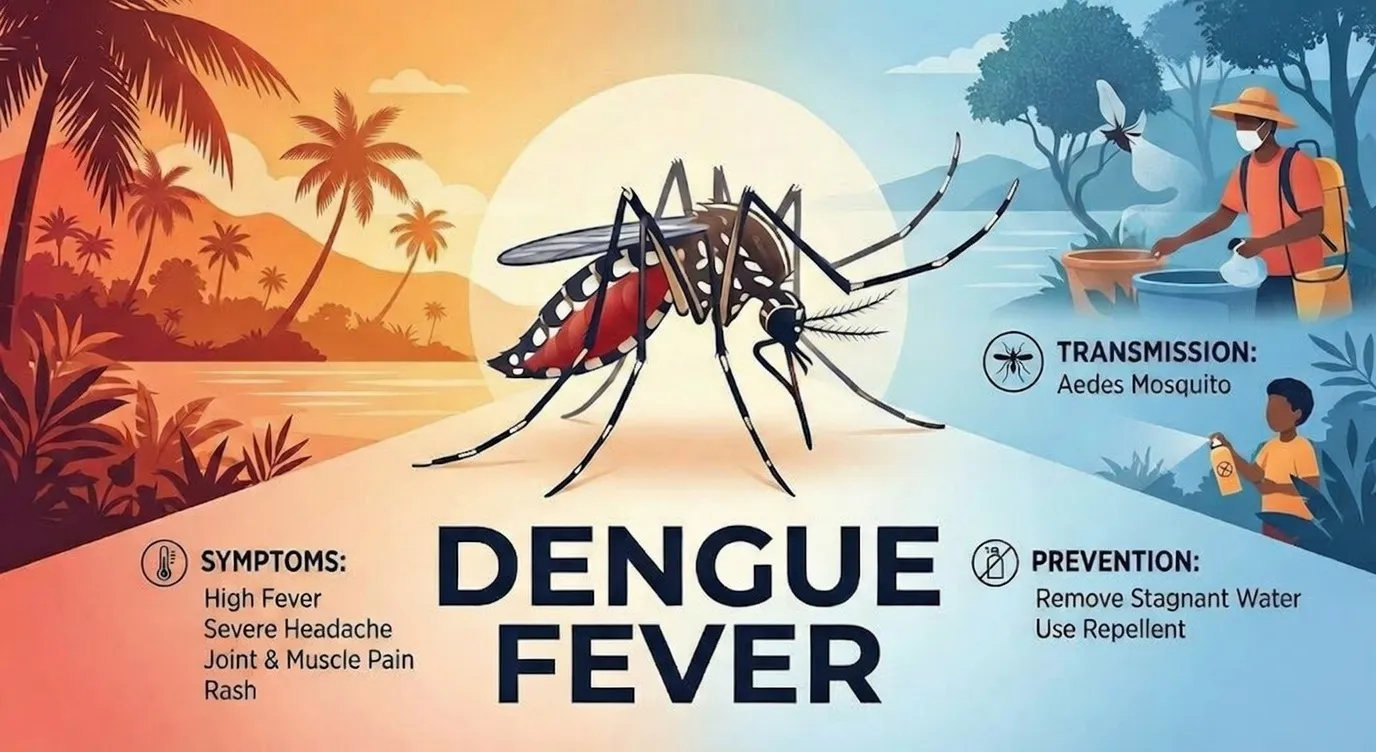
Dengue fever is a mosquito-borne viral infection caused by the Dengue Virus (DENV). It is primarily transmitted to humans through the bite of infected female mosquitoes, specifically the Aedes aegypti and, to a lesser extent, Aedes albopictus species.
Signs and Symptoms of Dengue Fever
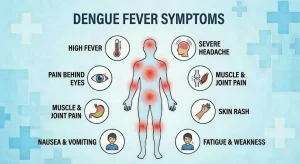
Dengue fever typically begins 4 to 10 days after a bite from an infected mosquito. The symptoms often mimic the flu, but the intensity of the pain—often described as “breakbone fever”—sets it apart.
Dengue fever symptoms
During the first 2–7 days of the illness (the Febrile Phase), patients generally experience:
-
High Fever: A sudden, high-grade fever often reaching $104^{\circ}F$ ($40^{\circ}C$).
-
Severe Retro-orbital Pain: A characteristic sharp pain located specifically behind the eyes.
-
Severe Headache: Usually localized in the forehead or temples.
-
Muscle and Joint Pain: Intense aches in the back, joints, and muscles that can make movement difficult.
-
Nausea and Persistent Vomiting: Leading to a loss of appetite and potential dehydration.
-
Generalized Fatigue: An overwhelming sense of weakness and exhaustion.
-
Dengue Rash: A flat, red rash that may appear over most of the body 2–5 days after the fever begins.
-
Swollen Glands: Lymph node enlargement is common during the early stages.
Evolution of Symptoms
It is vital to monitor the progression of dengue fever symptoms closely. While many patients recover after the febrile phase, some enter a Critical Phase just as the fever starts to subside.
Clinical Insight: If the fever drops below $100^{\circ}F$ ($38^{\circ}C$) but the patient feels significantly worse, this may indicate the onset of severe dengue rather than recovery.
7 Warning Signs of Severe Dengue
If you or a loved one exhibit any of these signs and symptoms of dengue fever during the critical 24–48 hour window after the fever breaks, seek emergency medical care immediately:
-
Severe Abdominal Pain: Intense tenderness or cramping in the stomach area.
-
Persistent Vomiting: Being unable to keep any fluids down (3 or more times in 24 hours).
-
Mucosal Bleeding: Bleeding from the nose or gums, or easy bruising (petechiae).
-
Hematemesis or Melena: Presence of blood in vomit or stools (which may appear black/tarry).
-
Rapid or Labored Breathing: Difficulty catching breath or rapid respiration.
-
Lethargy or Irritability: Extreme drowsiness, confusion, or unusual restlessness.
-
Fluid Accumulation: Clinical signs of swelling in the abdomen or limbs.
Prevention of Dengue Fever
Preventing dengue primarily involves eliminating mosquito breeding sites and protecting yourself from bites.
-
Eliminate Standing Water: Aedes mosquitoes breed in stagnant water. Empty, cover, or clean containers like flower pots, buckets, and discarded tires at least once a week.
-
Use Personal Protection: Wear long-sleeved shirts and long pants to minimize exposed skin. Apply insect repellents containing DEET or Picaridin on skin and clothes.
-
Secure Your Home: Use mosquito nets while sleeping, especially during the day when these mosquitoes are most active. Install window and door screens to keep them out.
-
Community Hygiene: Keep your surroundings clean and support local fogging efforts to reduce the mosquito population.
Diagnosis: The Dengue Fever Test
If you suspect an infection, a doctor will perform a physical exam and review your travel history. To confirm the diagnosis, a dengue fever test is required.
Diagnostic Guide for Dengue Fever
| Timeline | Recommended Test | Purpose |
| Day 1 – 5 | NS1 Antigen Test | To detect the presence of the virus during the early stage. |
| After Day 5 | Anti-Dengue IgM/IgG | To detect the body’s immune response (antibodies). |
| Daily / Regular | CBC (Complete Blood Count) | To monitor Platelet Count and Hematocrit levels. |
Management of Dengue Fever
Effective management of dengue fever focuses on supportive care, as there is no specific antiviral dengue fever treatment.
-
Hydration is Key: Drink plenty of fluids (water, ORS, or fruit juices) to prevent dehydration caused by high fever and vomiting.
-
Fever Control: Use Acetaminophen (Paracetamol) to manage high temperatures and body aches.
-
Avoid NSAIDs: Strictly avoid Ibuprofen, Aspirin, or Naproxen, as these can increase the risk of internal bleeding and platelet complications.
-
Physical Rest: Ensure complete bed rest to allow the body to recover and to monitor for any sudden changes in condition.
-
Monitor Platelets: Regular blood tests are essential to track the dengue fever platelet count and hematocrit levels.
-
Watch for Warning Signs: If severe abdominal pain, persistent vomiting, or bleeding occurs, seek immediate hospitalization for IV fluid resuscitation.
Complications of dengue fever
If not managed correctly, dengue fever can progress into life-threatening stages. The primary complications of dengue fever usually emerge during the “critical phase,” which begins as the fever starts to subside.
-
Dengue Hemorrhagic Fever (DHF): Characterized by high fever, damage to lymph and blood vessels, bleeding from the nose and gums, enlargement of the liver, and failure of the circulatory system.
-
Plasma Leakage: This is the most serious complication where the liquid part of the blood (plasma) leaks out of small blood vessels into body cavities, leading to fluid accumulation in the chest (pleural effusion) or abdomen (ascites).
-
Dengue Shock Syndrome (DSS): A severe form of DHF where blood pressure drops to dangerously low levels, leading to organ failure and, if untreated, death.
-
Internal Bleeding: Severe gastrointestinal bleeding can occur, often signaled by black, tarry stools or vomiting blood.
-
Organ Impairment: The virus can cause severe inflammation of the liver (hepatitis), heart (myocarditis), or brain (encephalitis).
Conclusion
Dengue fever is a significant public health threat that requires both personal vigilance and community action. Early diagnosis, proper hydration, and avoiding specific painkillers are vital for a safe recovery. Ultimately, the most effective defense remains eliminating mosquito breeding sites. Awareness and prompt medical care are the keys to saving lives.