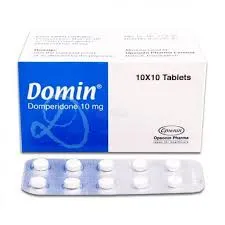
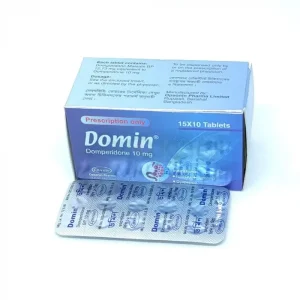
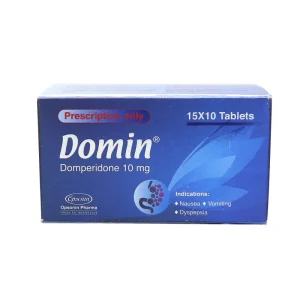
Domin 10 is a widely used Prokinetic and Antiemetic medication containing Domperidone Maleate. It is designed to increase the movement or contractions of the stomach and intestines, helping food move more easily through the digestive tract. Manufactured by Opsonin Pharma Ltd., it is a staple in managing digestive discomfort and nausea in Bangladesh.
What is Domin 10 Used For?
Domin 10 is prescribed for a variety of gastrointestinal issues, including:
-
Nausea and Vomiting: Effective for nausea caused by various factors, including migraine, certain medications, or radiotherapy.
-
Dyspepsia (Indigestion): Relief from the feeling of fullness, bloating, and upper abdominal pain.
-
GERD (Gastroesophageal Reflux Disease): Helps prevent stomach contents from flowing back into the esophagus.
-
Delayed Gastric Emptying: Treatment for “slow stomach” (gastroparesis), often seen in diabetic patients.
-
Heartburn: Relief from acid-related burning sensations in the chest.
Key Reminder: Domin 10 works best for motility issues. If your stomach feels “stuck” or heavy after eating, this medication is designed to get things moving.
Dosage
For adults and adolescents (12 years and older weighing $35\text{ kg}$ or more), the standard dosage is:
-
Standard Dose: 10 mg (one tablet) taken up to 3 times daily.
-
Maximum Dose: The total daily dose should not exceed 30 mg.
-
Duration: It is usually recommended for the shortest duration possible (typically not exceeding 7 days).
Administration Tip: Take Domin 10 approximately 15 to 30 minutes before meals. Taking it after food may delay its absorption and effectiveness.
Common Side Effects
While usually well-tolerated, some users may experience:
-
Dry mouth (the most common side effect)
-
Headache
-
Diarrhea
-
Drowsiness or dizziness
-
Anxiety or nervousness
Serious Side Effect Warning: In very rare cases, Domperidone can affect heart rhythm (QT prolongation). If you experience heart palpitations, fainting, or dizziness, stop the medication and consult a doctor immediately.
Important Warnings & Precautions
-
Heart Health: Not recommended for patients with existing heart conditions, congestive heart failure, or electrolyte imbalances.
-
Liver & Kidney Function: Use with extreme caution if you have moderate to severe liver or kidney disease.
-
Prolactinoma: Should not be used by individuals with a pituitary gland tumor (prolactinoma).
-
Interaction: Avoid taking it with certain antibiotics (like Erythromycin) or antifungals (like Ketoconazole).
Domin 10 vs. Omidon 10: Key Differences And Usage
Domin and Omidon are the two most common Domperidone brands in Bangladesh.
| Feature | Domin 10 (Opsonin) | Omidon 10 (Incepta) |
| Generic | Domperidone | Domperidone |
| Primary Use | Nausea & Motility | Nausea & Motility |
| Common Price | ৳3.50 per unit | ৳3.50 per unit |
| Popularity | High (Trusted Quality) | Very High (Market Leader) |
| Manufacturer | Opsonin Pharma Ltd. | Incepta Pharmaceuticals |
Domin 10 Price in Bangladesh (January 2026 Update)
The price of Domin 10 remains affordable across pharmacies in 2026.
| Product Name | Strength | Unit Price (BDT) | Strip Price (15s) |
| Domin 10 Tablet | 10 mg | ৳3.50 | ৳52.50 |
| Domin Suspension | 5 mg/5 ml | ৳35.00 (60ml) | ৳35.00 per bottle |
| Domin Paediatric Drops | 5 mg/ml | ৳25.00 (15ml) | ৳25.00 per bottle |
Domin 10 Alternative Brands & Prices
Top 10 alternatives available as of January 2026.
| Brand Name | Company Name | Price per Unit (10mg) |
| Omidon 10 | Incepta Pharmaceuticals | ৳3.50 |
| Motigut 10 | Square Pharmaceuticals | ৳4.00 |
| Deflux 10 | Beximco Pharma | ৳4.00 |
| Ridon 10 | Eskayef (SK+F) | ৳2.50 |
| Domiren 10 | Renata Limited | ৳3.50 |
| Dopadon 10 | Ibn Sina Pharma | ৳3.00 |
| Don-A 10 | ACME Laboratories | ৳3.50 |
| Vave 10 | ACI Limited | ৳4.00 |
| Apuldon 10 | Aristopharma Ltd. | ৳3.50 |
| Sandom 10 | Synovia Pharma (Sanofi) | ৳2.00 |
Frequently Asked Questions (FAQ) About Domin 10
Q: What is the Domin 10 price in Bangladesh?
As of January 2026, the unit price of a Domin 10 tablet is ৳3.50. A strip of 15 tablets costs ৳52.50.
Q: What is Domin 10 used for?
Domin 10 is primarily used to treat nausea, vomiting, indigestion, bloating, and the feeling of excessive fullness after meals. It is also used to manage symptoms of GERD and delayed stomach emptying.
Q: What are the side effects of Domin 10?
The most frequent side effect is dry mouth. Others include headache, diarrhea, and occasionally breast tenderness or discharge. Serious heart-related side effects are extremely rare.
Q: What is the recommended Domin 10 dose?
For adults, the typical dose is one 10 mg tablet up to 3 times a day, ideally 15–30 minutes before eating. Do not exceed 3 tablets in a 24-hour period.
Q: Is Domin 10 good for a cough?
No. Domin 10 is for the digestive system. It will not treat a cough unless it is a secondary symptom of severe acid reflux (GERD) causing throat irritation.
Q: What does Domin 10 do?
It is a “dopamine antagonist” that increases the movement of the stomach and intestines. This helps move food through the system faster and blocks the “vomiting center” in the brain.
Q: Does Domin 10 make you sleepy?
Drowsiness is an uncommon side effect. While most people do not feel sleepy, you should observe how it affects you before driving or operating heavy machinery.
Q: Is Domin 10 high risk?
It is considered “high risk” for people with pre-existing heart rhythm issues or those taking certain medications that affect the heart. For a healthy person using it for a short period (under 7 days), it is very safe.
Q: Is Domin 10 safe during pregnancy?
Domin 10 is generally not recommended during pregnancy unless specifically prescribed by a doctor. There is limited data on its effects on human fetuses, so it is only used when the benefit clearly outweighs the potential risk.
Q: Can I take Domin 10 while breastfeeding?
Domperidone passes into breast milk in very small amounts. While it is sometimes used under medical supervision to increase breast milk supply (as a galactogogue), it is generally advised to use it with caution because it can potentially cause heart rhythm issues in the infant. Always consult a lactation specialist or doctor.
Disclaimer: This is educational information only (updated January 2026). Not a substitute for professional medical advice. Always consult a qualified physician before starting/stopping any medication.